Bathroom Innovation
Villeroy & Boch Wash Basins & Bathroom Collections: Choosing the Right Series
If you have ever stood in a bathroom showroom trying
A washroom is judged twice. The first time is at handover, when everything is clean, aligned and photographed. The second is three years later, when thousands of people have used it and a facilities team has cleaned it far more often than any homeowner would. For architects and developers, the second judgement is the one that decides whether a specification was a good one.
That is why Villeroy & Boch projects in hotels, hospitals and large commercial buildings are worth studying closely. They show how a bathroom brand behaves when the brief is not one beautiful room but hundreds of identical ones that all have to keep working. This article looks at what changes in high-traffic spaces, what Singapore project teams need to design to, and where Villeroy & Boch’s technology fits.
Most published guidance on busy washrooms comes from the UK and US, so it is best read as industry direction rather than Singapore data. It is consistent, though: in heavily used buildings, durability and ease of maintenance carry as much weight as appearance.
A washroom that is out of service costs the building owner money and goodwill. Specification advice for commercial washrooms repeatedly stresses keeping uptime high and repair costs low. In practice that means surfaces that clean quickly, fewer places for dirt to collect, and fixtures that tolerate impact and frequent cleaning without dulling.
Layout matters too. Zoning is a common strategy in busy buildings, and some guides suggest placing handwashing outside individual cubicles so queues move faster.
Sensor-operated fittings are increasingly treated as standard in busy washrooms because users no longer need to touch shared surfaces. Commercial design commentary also points to more personal space for users, including separate basins, partly to limit cross-contamination. None of this is exotic, but each choice adds up across a building with hundreds of daily users.
Whatever the global trends, a Singapore specification starts with local rules.
Water efficiency. PUB requires certain water fittings, including taps, dual-flush low-capacity cisterns and urinal flush valves, to be registered under the Mandatory Water Efficiency Labelling Scheme before they can be supplied. From 1 January 2023, WC flush valves installed at premises must be rated at least 2 ticks. SwissWerkz has covered this in more detail in its guide to WELS and PUB requirements.
Accessibility. BCA’s Code on Accessibility in the Built Environment applies to new buildings and to existing buildings undergoing major additions and alterations. The updated 2025 Code took effect on 1 November 2025, and the changes include more toilet cubicles with grab bars. Project teams should check the current Code on the BCA website for the exact provisions that apply to their building type.
Design and upkeep. The Restroom Association (Singapore) publishes a guide to public toilet design and maintenance, which is a useful companion when briefing facilities teams.
The points below come from Villeroy & Boch and trade coverage of its products, so they are the manufacturer’s claims. Project teams should confirm the details for the exact model they specify.
Villeroy & Boch’s DirectFlush WCs replace the conventional flushing rim with a water flow designed to rinse the whole interior of the bowl. With no hidden rim, cleaning is quicker and more thorough, which matters most where a washroom is cleaned many times a day. The brand cites hygiene testing by a European institute that found the design practically germ-free after cleaning. For a closer look at the toilet range, see the SwissWerkz toilet bowl guide.
Three surface technologies sit on top of the ceramic:
The underlying material is a separate subject. If you want that detail, the article on TitanCeram and Quaryl covers it.
For washrooms with high male usage, the brand’s urinals are designed with a back wall angle that directs splashes down into the bowl. Villeroy & Boch also offers automatic flush control, called ProDetect 2, which integrates into the ceramic without visible hardware. That keeps the look clean and removes a touch point.
Villeroy & Boch has stated that its toilets use 3 or 4.5 litres per flush. A low flush volume is welcome in a high-traffic building, but it does not replace compliance. Confirm the registered WELS rating of the specific model with SwissWerkz before it goes into a specification.
Villeroy & Boch describes its PROJECTS system as covering luxury hotels, university hospitals, Olympic stadiums and apartment buildings. A few published references show what that looks like:
These are international examples, and none of them is a Singapore project. What they have in common is useful, though. Each involves many rooms that need to look the same and perform the same, a mix of private and public washrooms, and a supplier that works with the design team from the first draft through to completion. That is the standard a high-traffic specification has to meet.
SwissWerkz has supplied sanitary ware in Singapore since 2008, serving architects, designers, consultants and developers across healthcare, government, hospitality and residential work. Its project list shows what scale looks like on the ground:
To be clear, these are SwissWerkz supply projects across its brand portfolio, not Villeroy & Boch references. They illustrate the coordination a project distributor handles when volumes are large and layouts vary.
An honest specification conversation also looks at tiers. SwissWerkz carries several brands, including its in-house ARC range for cost-effective commercial and hospitality projects. On a large development, a premium Villeroy & Boch specification may suit guest-facing or flagship areas, while other zones may be better served by a different tier. The brands page sets out the full portfolio.
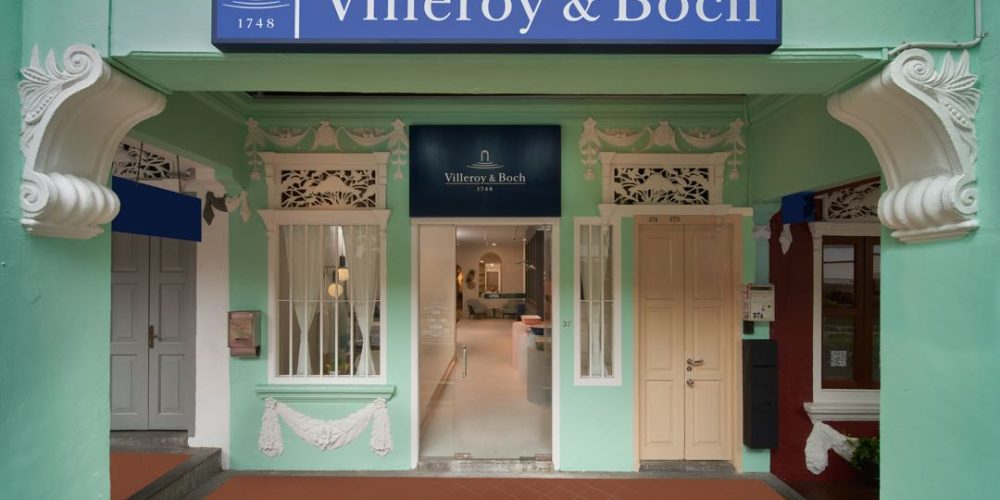
To handle the products in person, the flagship Villeroy & Boch showroom is at 37 Kreta Ayer Road. Completed local work is listed on the projects page.
Before a high-traffic washroom specification is locked, these questions are worth asking:
Villeroy & Boch positions features such as DirectFlush, CeramicPlus and AntiBac for busy commercial and public settings. Suitability still depends on the model and the traffic profile, so it is worth speaking to the SwissWerkz team through the contact form early in the specification.
WELS ratings are assigned to individual registered products, and WC flush valves installed at premises must be at least 2 ticks. Confirm the registered rating of the exact model with SwissWerkz, and see PUB’s water fittings requirements for the current rules.
BCA’s Code on Accessibility in the Built Environment sets the baseline, and the updated 2025 Code took effect on 1 November 2025. Check the current Code on the BCA website for the provisions that apply to your project.
At the flagship showroom at 37 Kreta Ayer Road. Details are on the showroom page.
Villeroy & Boch projects around the world tell a consistent story: the brand is specified where many rooms must perform alike and keep performing. For Singapore’s architects and developers, the same logic applies. Choose fixtures that clean quickly, check the exact model against WELS and BCA requirements, and confirm that supply will hold up across the whole project.
If you would like to see how this plays out in practice, you can view Villeroy & Boch worldwide projects on the manufacturer’s PROJECTS pages, or talk to the team at SwissWerkz about your own development.
If you have ever stood in a bathroom showroom trying
Bathroom specification in 2026 has quietly shifted. Fixtures are getting

If you are planning a bathroom renovation in Singapore and
