Uncategorized
TitanCeram & Quaryl Explained: The Technology Behind Villeroy & Boch’s Innovation
Bathroom specification in 2026 has quietly shifted. Fixtures are getting

If you are planning a bathroom renovation in Singapore and have started looking at toilet bowls, you have almost certainly come across the Villeroy & Boch name. Finding a Villeroy & Boch toilet in Singapore is not difficult. What is less straightforward is understanding which type of toilet actually suits your home, your plumbing situation, and your renovation budget. Wall-hung, rimless, close-coupled: the terminology can blur together quickly, especially when you are already juggling tile selections, vanity options, and contractor quotes. This guide cuts through the noise and explains the practical differences between each configuration so you can make a confident decision.
What Makes Villeroy & Boch Toilets Worth Considering
Villeroy & Boch has been producing ceramic sanitary ware since 1748. The brand is German in origin but has long been sold across Asia as a benchmark for quality bathroom fixtures. What sets their toilet range apart in the current market are three things: the material, the surface technology, and the flushing systems.
Their ceramic is produced to high density standards, which gives each piece a solid, weighty feel and resists chipping and crazing over time. The CeramicPlus surface coating is applied to many models and causes water and dirt to bead and slide off the bowl rather than settle. For Singapore homes where humidity is constant and mould is a persistent concern, this is a meaningful advantage over untreated ceramic.
On top of that, their AntiBac glaze, available on selected models, uses silver ions embedded into the ceramic surface to reduce bacterial growth by up to 99.9 percent. These are not cosmetic features. They are material differences that affect how clean your bathroom stays between scrubs.
For homeowners in Singapore, the best place to explore and purchase the full range is SwissWerkz, the exclusive Villeroy & Boch retail distributor here. Their showroom at 37 Kreta Ayer Road carries a wide selection across collections and configurations, and the team can advise on compatibility with local plumbing setups. You can also browse the current range at swisswerkz.com.sg before visiting.
The Three Main Toilet Configurations Explained
Wall-Hung (Wall-Mounted) Toilets
A wall-hung toilet has the bowl suspended off the floor, typically at a height of 40 to 45 centimetres, with the cistern concealed inside the wall behind a carrier frame. There are no visible pipes, no base touching the floor, and the result is a clean, floating silhouette that has become one of the defining features of modern Singapore bathroom renovations in 2025 and 2026.
The practical benefits go beyond aesthetics. Because the bowl is raised off the floor, cleaning underneath is straightforward: no base to scrub around, no grout line at the foot of the toilet collecting grime. The concealed cistern frame also frees up 10 to 15 centimetres of depth compared to a close-coupled model, which matters considerably in a typical HDB master bathroom measuring four to five square metres.
Another underappreciated advantage is that the installation height can be adjusted to suit the household. The carrier frame is fixed during the renovation phase and the bowl is mounted at whatever height feels comfortable, which is particularly useful for taller users or for elderly residents.
The trade-offs are real. Wall-hung toilets require a renovation context: the wall needs to be opened up to install the in-wall frame, which means this is not a fixture you can swap in without broader plumbing work. Installation costs are higher than a close-coupled unit, and accessing the cistern for repairs later requires removing part of the wall or accessing a service panel.
Within the Villeroy & Boch range, the Subway 3.0 is the flagship wall-hung model and features the brand’s TwistFlush technology (more on this below). The Architectura collection also offers wall-hung options across a range of shapes and sizes, with both DirectFlush and TwistFlush variants available.
Rimless Toilets: DirectFlush and TwistFlush
Rimless is not a toilet type in the same way wall-hung or close-coupled describes a mounting style. It is a design feature that can appear across both wall-hung and floor-standing models. It is worth understanding separately because it genuinely changes the hygiene and cleaning experience.
A traditional toilet bowl has a rim running around the inside of the upper bowl. Water enters from holes along this rim during flushing. The problem is that the underside of this rim is nearly impossible to clean thoroughly, and bacteria, limescale, and mould accumulate there over time. In Singapore’s humidity, this becomes a noticeable hygiene issue within months of installation.
A rimless toilet eliminates this entirely. The bowl is open at the top, and water is directed around the full inner surface through a precisely engineered flow channel. Every part of the bowl is accessible to both the flush water and a cleaning brush.
Villeroy & Boch offers two rimless flushing technologies. DirectFlush is their established system, available across multiple collections including Avento, Venticello, Memento 2.0, Architectura, and Collaro. It delivers a splash-free, full-bowl rinse using just 3 to 4.5 litres per flush and has been independently tested to confirm near-complete bowl coverage.
TwistFlush is the more recent and more advanced system, currently featured in the Subway 3.0 collection. Instead of directing water around the bowl in a conventional flow, TwistFlush generates a controlled water vortex inside the bowl. The vortex uses physical force to carry waste and clean the surface simultaneously, reaching close to 100 percent bowl coverage with the same 3 to 4.5 litre volume. The motion also reduces noise significantly compared to a standard flush, which is a notable benefit in apartment and condo settings where plumbing noise travels between units.
Both DirectFlush and TwistFlush are considerably more hygienic than rimmed alternatives, and both are well suited to Singapore’s climate where routine cleaning needs to be fast and effective.
Close-Coupled Toilets
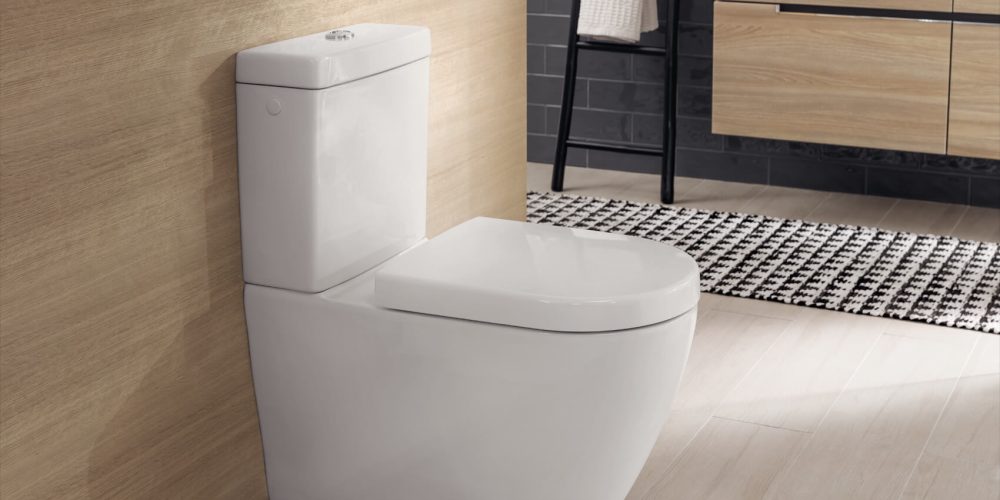
A close-coupled toilet is the most familiar configuration: the cistern sits directly on top of the toilet bowl as one unit, connected by a short flush pipe. The cistern is visible, the footprint is standard, and installation is comparatively simple.
For straightforward renovations, particularly HDB resale units where the existing plumbing layout is staying in place and structural changes are not planned, a close-coupled toilet is often the practical choice. Installation costs are lower, the cistern is easy to access for maintenance, and no in-wall frame work is required.
The Avento close-coupled toilet bowl from Villeroy & Boch is a well-regarded entry point into the range. It features rimless DirectFlush technology, a dual-flush system (4.5 litres full flush, 3 litres reduced), and a soft-close seat. The design is compact and contemporary, making it a reasonable choice for guest bathrooms or service toilets where the priority is reliable hygiene at a manageable cost.
The limitation of close-coupled models is footprint. The combined cistern and bowl unit takes up more depth than a wall-hung configuration with a concealed cistern. In a small bathroom, this is a real constraint. Cleaning the floor around the base is also more involved than with a floating wall-hung model.
How to Choose the Right Type for Your Home
The decision usually comes down to three variables: the scope of your renovation, the size of your bathroom, and your budget.
If you are doing a full hack-and-redo of your bathroom, a wall-hung rimless toilet is worth the additional investment. The installation cost premium is absorbed into the broader renovation budget, and the long-term benefits in terms of cleaning ease, visual space, and design quality are significant. This is particularly relevant for condo and landed property renovations where design standards are higher and the bathrooms may be larger.
If you are doing a lighter refresh or working within an existing plumbing layout, close-coupled rimless models give you most of the hygiene benefits of DirectFlush technology at a fraction of the structural complexity. You still get a rimless bowl, dual flush water efficiency, and a clean contemporary look.
For HDB buyers, note that HDB imposes a three-year restriction on hacking bathroom tiles in new BTO flats. Any toilet replacement that requires structural plumbing changes needs to be planned at the point of first renovation, not added later. For resale flat buyers, a full wet-area renovation is usually viable from the start, which opens up the wall-hung option.
On water efficiency, Singapore’s Water Efficiency Labelling Scheme (WELS) rates toilet fixtures on a tick system. Many Villeroy & Boch models carry two WELS ticks, confirming compliance with local water consumption standards. Confirm the specific WELS rating of your chosen model with the retailer before purchasing.
Villeroy & Boch Collections Worth Knowing
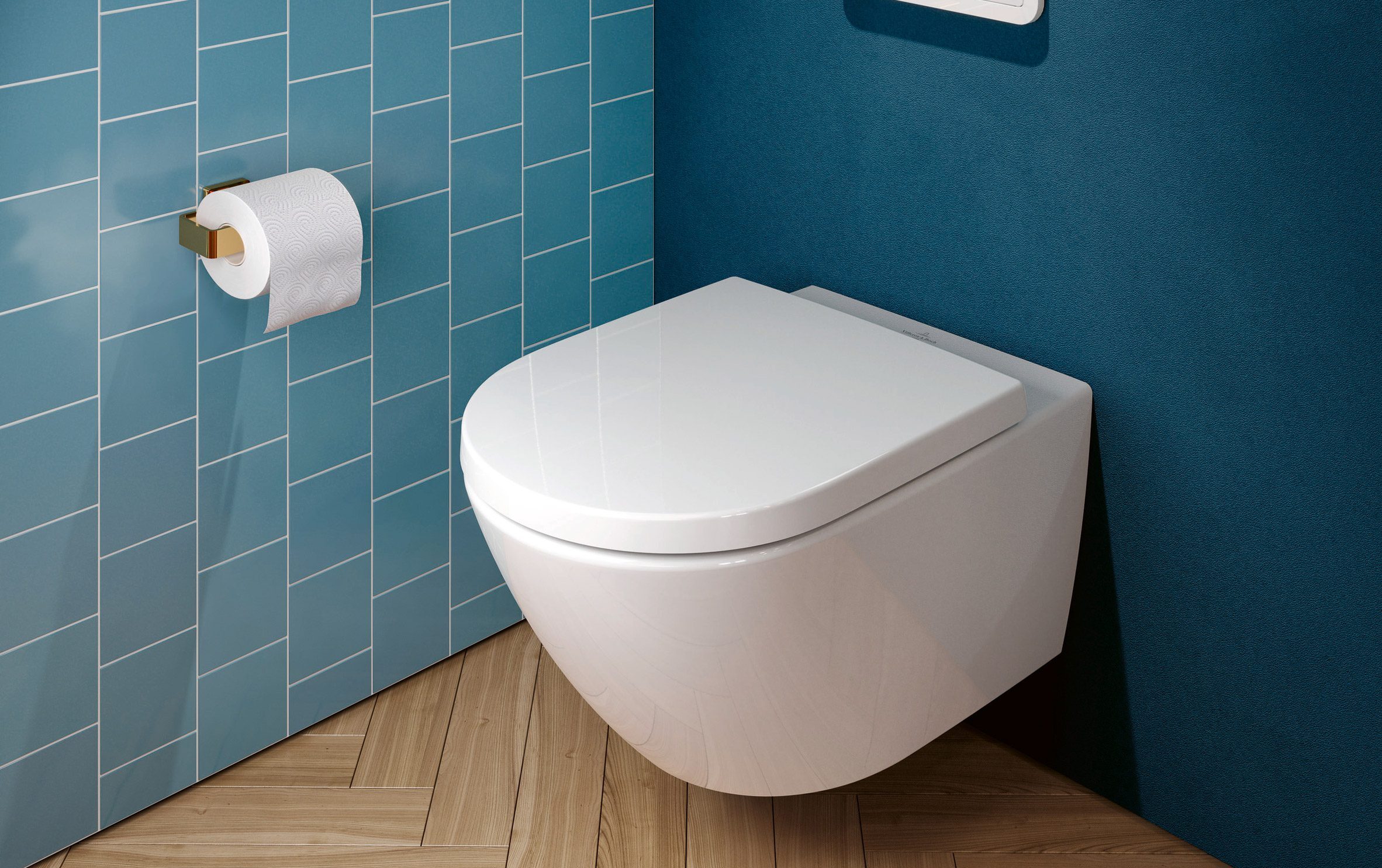
The Subway 3.0 is the current flagship and the one to consider if you want wall-hung installation with TwistFlush technology. It is available in White Alpin and Stone White and pairs with Villeroy & Boch’s ViConnect cistern frame system.
The Architectura collection is the most versatile in the range, offering both wall-hung and floor-standing options across multiple shapes. It is available with DirectFlush and TwistFlush technology and suits bathrooms ranging from compact HDB layouts to larger condo master baths.
The Avento range is the compact, accessible option. Primarily available in close-coupled and back-to-wall configurations with DirectFlush technology, it represents the most affordable way into the V&B toilet range without compromising on hygiene performance.
The Antao collection occupies the premium end. Its forms are softer and more organic, departing from the angular lines of Subway and Architectura, and it suits bathrooms where a more design-forward, spa-like quality is the goal.
All collections are designed to coordinate with Villeroy & Boch basins, bathtubs, and shower trays, which simplifies the process of building a cohesive bathroom scheme from a single brand.
Where to Find Villeroy & Boch Toilet Bowls in Singapore
SwissWerkz has been the authorised Villeroy & Boch retailer in Singapore since 2008 and carries the broadest local selection of the brand’s bathroom ceramic range. Their showroom is located at 37 Kreta Ayer Road and is open for visits where the team can walk you through configurations, installation requirements, and collection options suited to your specific bathroom layout.
You can also view the available range online at swisswerkz.com.sg, which is a useful starting point before committing time to a showroom visit.
Conclusion
Choosing a Villeroy & Boch toilet in Singapore is less about picking the most expensive option and more about matching the right configuration to your renovation context. Wall-hung models offer the most space-efficient and visually clean result but require commitment at the renovation planning stage. Rimless technology, whether through DirectFlush or TwistFlush, delivers meaningfully better hygiene than a traditional rimmed bowl and suits Singapore’s humid environment well. Close-coupled models remain the pragmatic choice for renovations where structural simplicity is the priority.
Once you know which type fits your home, the collection and finish decisions follow naturally. If you are ready to narrow it down, Compare V&B Toilet Models at swisswerkz.com.sg or visit the showroom at 37 Kreta Ayer Road for a hands-on look at what is available.
Bathroom specification in 2026 has quietly shifted. Fixtures are getting

Specifying bathroom fittings for Singapore projects sits at the intersection
For architects and developers working on high-specification projects, the sanitary